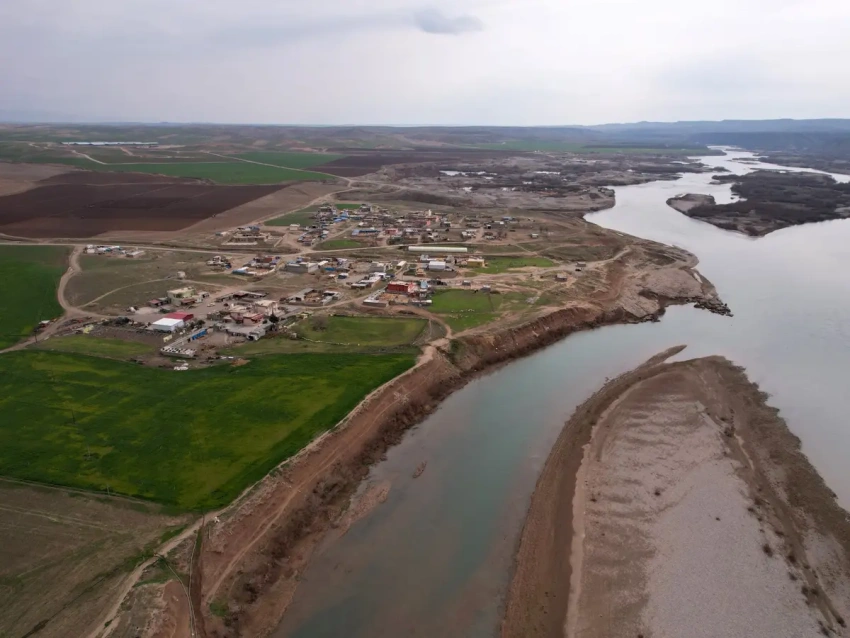
Iraq's Water Crisis: Sharp Decline in Reserves and Future Repercussions Threatening the Agricultural Sector
Iraq is facing a severe water crisis that is quietly escalating away from the noise of global events, posing a strategic threat to its stability and future. This crisis is attributed to climate change and complex regional water policies, amid serious warnings of deteriorating conditions in the coming years. Water reserves in the "Land of the Two Rivers" have seen a dramatic drop from 18 billion cubic meters last year to approximately 10 billion cubic meters currently, resulting in severe damage to the agricultural sector and the livelihoods of thousands of families across various provinces. In this context, the former head of the Parliamentary Agriculture and Water Committee, Furat Al-Tamimi, stated on (May 26, 2026) that the crisis is no longer a temporary circumstance but a prolonged trajectory. He noted that recurrent droughts have allowed neighboring countries to export agricultural crops to Iraq valued at nearly one billion dollars annually. He criticized the excessive construction of dams on shared rivers without considering fair water shares, making Iraq, and Baghdad in particular, the most affected. Al-Tamimi called for the urgent adoption of a comprehensive national strategy to mitigate the crisis, including recycling wastewater for agricultural purposes, regulating the use of groundwater, and investing in rainwater through water harvesting projects. These warnings align with previous official data from the Ministry of Water Resources, which confirmed a 57% decrease in water reserves compared to the previous year, and a drop in the revenues of the Tigris and Euphrates basins to 27%, marking one of the harshest drought seasons since 1933.